September 2026 Newsletter: Medical Emergency Preparedness

Happy Fall Y'all!
September in Colorado means the weather (should) be cooling down, pumpkin spice lattes are back on the menu, and leaf peeping is in our near future. September also means Emergency Preparedness Month and Fall Prevention Week (September 21st - 26th).
South Metro Fire Rescue wants you to honor the changing of the seasons by learning how to identify a medical emergency, creating a plan for the unexpected, and reviewing our Fall Prevention information.

SEPSIS: Don't ignore the signs
Sepsis is the body's extreme response to an infection. Anyone can get an infection, and any infection can lead to sepsis if left untreated. Every year, more than 1.7 million Americans are diagnosed with sepsis, and it remains one of the leading causes of death in hospitals. This can quickly become a life-threatening emergency.
Know the signs of sepsis (remember TIME):
- Temperature – higher or lower than normal
- Infection – signs and symptoms of infection
- Mental decline – confusion, sleepiness, difficult to rouse
- Extremely ill – severe pain, shortness of breath, or “feeling like you might die”
Some other symptoms of sepsis include:
- High heart rate or weak pulse
- Disorientation or confusion
- Extreme pain or discomfort
- Fever or feeling very cold
- Shortness of breath
- Sweaty skin
If you suspect sepsis, call 9-1-1 immediately. Quick recognition and treatment save lives.
September is Sepsis Awareness Month
This September, join South Metro Fire Rescue in raising awareness—because knowing the signs of sepsis can make all the difference. Watch the video below to hear about one citizen's experience with sepsis:
HEART ATTACKS: Know The Signs
A heart attack occurs when blood flow to the heart muscle is blocked. Recognizing the symptoms promptly is crucial for timely medical intervention. The following are common symptoms of a heart attack, but this list is not exhaustive - if you are ever concerned you may be having a heart attack, call 9-1-1 immediately. Medics will quickly arrive and evaluate you.

Women often experience different and more subtle heart attack symptoms than men, frequently without severe chest pain. Symptoms can appear gradually, days or weeks before, and are often mistaken for the flu or indigestion.
Common Women-Specific Heart Attack Symptoms
- Unusual Fatigue: A sudden, intense tiredness or lack of energy that may last for days.
- Back, Neck, or Jaw Pain: Pain that radiates to the upper body, often described as pressure or aching.
- Shortness of Breath: Difficulty breathing, sometimes even without chest discomfort.
- Nausea, Vomiting, or Indigestion: Often mistaken for a stomach bug or heartburn.
- Cold Sweats: Breaking out in a cold sweat without obvious reason.
- Lightheadedness or Dizziness: Feeling faint or dizzy.
- Chest Discomfort: While not always severe, this may include squeezing, pressure, or fullness in the center of the chest.
Important Considerations
- Subtle Onset: Symptoms may be mild, come and go, or be mistaken for anxiety or stress.
- Delayed Recognition: Women often downplay symptoms, which can lead to delayed recognition.
- Emergency Action: If these symptoms are experienced, call 911 immediately; do not drive yourself to the hospital.
STROKES: Be fast
Stroke is the No. 4 cause of death and a leading cause of disability in the United States. (American Stroke Association)
A stroke occurs when a blood vessel that carries oxygen and nutrients to the brain is either blocked by a clot or bursts (or ruptures). When that happens, part of the brain cannot get the blood (and oxygen) it needs, so it and brain cells die.

B = Balance Loss - Is there a sudden loss of balance or coordination? Is the person having trouble walking or experiencing dizziness?
E = Eye (Vision) Changes - Are there sudden changes in vision? Ask the person if they are experiencing blurred vision, double vision, or loss of sight in one or both eyes.
F = Face Drooping - Does one side of the face droop, or is it numb? Ask the person to smile. Is the person's smile uneven?
A = Arm Weakness - Is one arm weak or numb? Ask the person to raise both arms. Does one arm drift downward?
S = Speech Difficulty - Is speech slurred or difficult to understand? Ask the person to repeat a simple sentence.
T = Time to Call 9-1-1 - If you have any of these symptoms or see someone else having them, call 9-1-1 immediately!
A transient ischemic attack (TIA) is a warning or "mini" stroke. This can include all the same symptoms of a stroke, the only difference being that it resolves on its own. This is still a medical emergency and requires you to be seen by a doctor. A TIA can be a warning sign of your susceptibility to future strokes.
Fall Prevention Week: September 21-26
One out of five falls cause a serious injury such as a broken bone or a head injury. These injuries can make it hard for a person to get around, do everyday activities, or live on their own. South Metro is committed to assisting our older adult population stay active, healthy, and as independent as possible for as long as possible. The biggest risk we have found to this longevity is falls. But there's good news! Falls are NOT an inevitable part of aging.
There are 4 Core Principles to fall prevention:
1. Professional Consultation - Whether you’ve already experienced a fall, are worried about falling, or haven’t given it much thought, it’s a good idea to talk with your primary care physician about a fall risk assessment. Together, you can create a personalized prevention plan that may include support from physical or occupational therapists, as well as addressing vision changes, foot concerns, or dizziness.
2. Medication Review - Certain medications can increase your risk of falls, such as Benzodiazepines, Opiates, Antidepressants, Anticonvulsants, muscle relaxants, and so many others. We recommend reviewing your medications with your doctor or pharmacist to understand your risk and avoid any conflicting medications.
3. Physical Activity - Engaging in exercise that includes strength, aerobics, and balance training will help you maintain the strength required to prevent falls. CLICK HERE to learn Simple Excercises from AgeWise Colorado to decrease your risk of falling.
4. Environmental Modifications - Identifying and removing home hazards like poor lighting or clutter. Use the checklist below to mitigate fall risks in your home.
AFTER A FALL:
If you’ve had a fall, you’re not alone, and it’s important to know that one fall often raises the chances of falling again. In fact, nearly half of older adults who fall will experience another fall within a year.
Why does this happen?
- Physical changes: Injuries, pain, or less activity after a fall can lead to weaker muscles and balance problems.
- Fear of falling: Many people limit their movement after a fall, which can actually increase the risk of falling again.
- Health factors: Issues with vision, medications, foot pain, or dizziness may play a role.
- Home hazards: Tripping risks like poor lighting, clutter, or loose rugs can cause repeat falls if not addressed.
The good news: A fall is a warning sign, not an endpoint. By talking with your healthcare provider, you can get a fall risk assessment and a personalized plan to stay active, confident, and safe.

WHO: Join leaders from across Colorado for the official launch of the first-ever Colorado Falls Prevention Coalition.
WHAT: This inaugural summit will unite experts and stakeholders from across the state to develop innovative solutions for falls, strengthen partnerships, and launch a collaborative statewide movement to reduce falls and improve quality of life for older Coloradans.
WHEN: Tuesday, September 22, 2026 from 8:00 a.m. - 4:00 p.m.
WHERE: Cherry Creek Conference Center
Register for the Summit

Reach out to South Metro Fire Rescue's Community Risk Reduction Team for any questions about fall prevention or to request a home visit and fall risk assessment. CLICK HERE TO CONTACT US
Preparing for Medical Emergencies
Emergencies can happen at any time - so the best time to prepare for them is right now!
A File of Life Magnet will help keep your medical information organized in case of emergency. When kept updated and visible on your refrigerator, this file is a priceless resource for first responders should they respond to an emergency at your home.
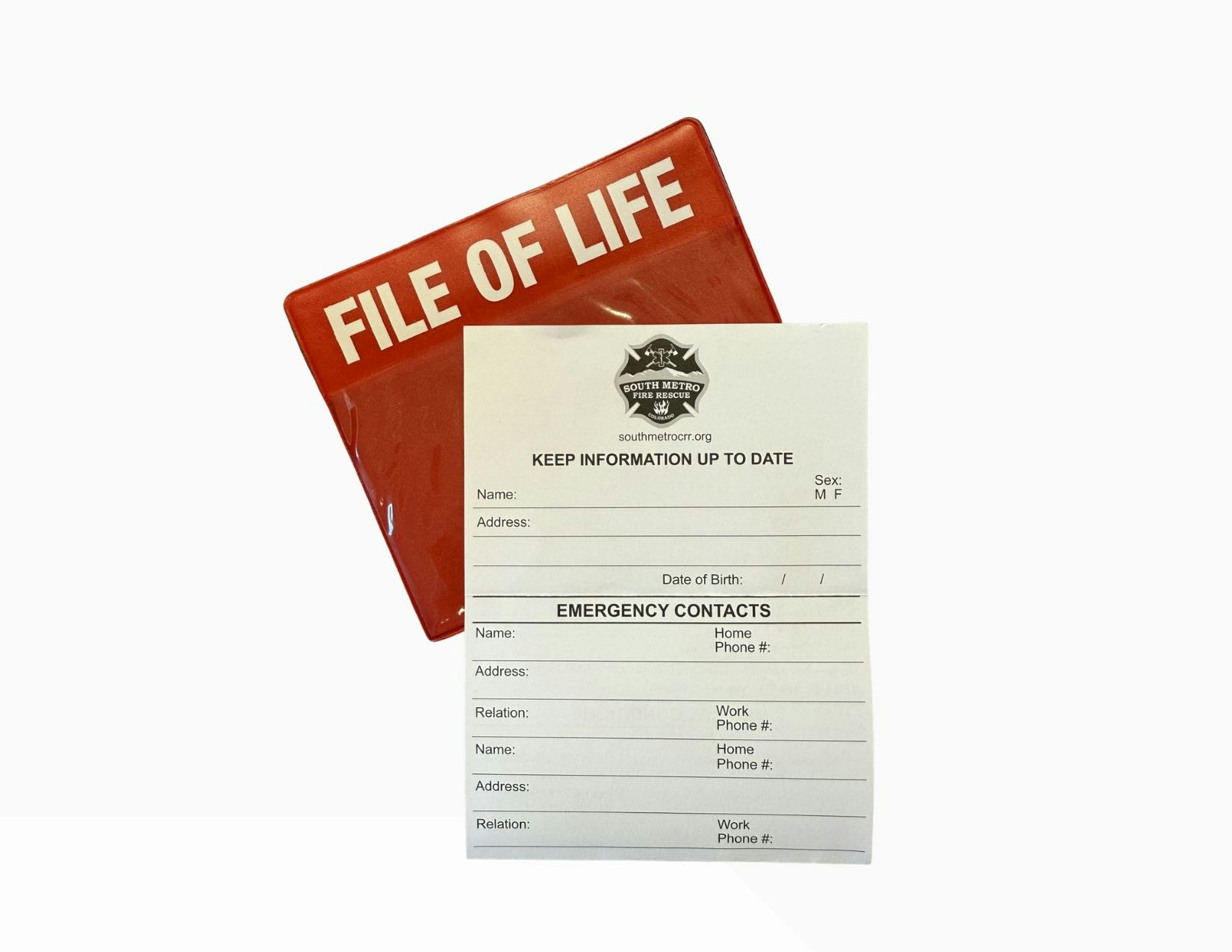
Request a FREE File of Life Magnet by clicking here: FILE OF LIFE ORDERS
Download your own copy of the insert here:
File of Life Downloadable Insert.pdf
Household Medication and Sharps Disposal
SOUTH METRO FIRE RESCUE IS NOT A DISPOSAL OR COLLECTION SITE.
Thank you for taking the time to dispose of medical waste, unused medications, and used sharps safely. Improper disposal can put people, pets, wildlife, and our environment at risk. What goes in the trash, toilet, or recycling bin can end up injuring sanitation and recycling workers, contaminating our water and soil, or being accidentally swallowed by curious children and animals.
Dispose of these items safely. Protect our community from preventable harm.

CDPHE coordinates the MEDICATION AND SHARPS TAKEBACK PROGRAM, which aims to increase proper diversion of household medications and sharps (needles). The program consists of household medication collection receptacles (kiosks) at participating law enforcement agencies, pharmacies, and clinics across Colorado. Click Here to learn more about the CDPHE MEDICATION AND SHARPS TAKEBACK PROGRAM.

When prepared properly, Household Bandages, Medical Waste, and Sharps can be disposed of in your household waste. Follow the CDPHE Guidelines for proper disposal:
- Do not flush medications down the toilet or drain. Flushing even small quantities of household medications can contaminate drinking water supplies. Follow CDPHE instructions on their website for Medication Disposal in your household trash.
- Never put a container of sharps in with your recyclable. Sharps are not recyclable, and they can pose an infection risk to workers at the recycling facility and render the whole batch of recyclables unusable. Never place used needles and other sharps loosely in your trash or flush them down the toilet.Follow CDPHE instructions for safe Sharps Disposal in your household trash.
Click here for the step by step instructions on Safe Bandage, Medication, and Sharps Disposal for Households.
ER vs Urgent Care vs Primary Care
South Metro Fire Rescue often receives questions about the differences in care at Primary Care, Urgent Care, and Emergency Room (ER) facilities. To help answer this question, we have included the chart below.

Did you know 9-1-1 can go both ways?
Emergency alerts inform residents about time-sensitive threats like evacuations, hazardous materials releases, extreme weather warnings, or other public safety issues.
The system sends alerts via landline, cell phone, email, or text message when seconds count. Don't miss out on potentially life-saving information.

Visit www.southmetrocrr.org/emergency-alerts for more information.
Thank you for doing your part to keep yourself, your home, and our community safe.
Please share this important safety information with friends and neighbors so we can all stay safe together! Encourage them to sign up for our Newsletter: CLICK HERE TO SIGN UP.

From our South Metro Family to yours, Happy Fall Y'all!